Yankton Federal Prison Camp provides a structured environment for inmates who pose a lower security risk. Located in Yankton, SD, it features dormitory-style housing and limited perimeter fencing, creating a more open and supervised setting. Inmates have access to educational and vocational programs designed to help them prepare for life after release. The minimum-security classification allows for work assignments both inside and outside the facility, emphasizing responsibility and personal growth.
As a minimum-security prison, FPC Yankton focuses on rehabilitation while maintaining safety. The BOP oversees daily operations, ensuring consistency in rules, programs, and inmate services. Residents benefit from structured schedules, work opportunities, and activities that promote skill development. This balance of security and support makes FPC Yankton an important part of the federal prison system in South Dakota.
Yankton Federal Prison Camp Facility
FPC Yankton is a federal prison facility located in Yankton, South Dakota Prison, managed by the Bureau of Prisons (BOP). Established on the former Yankton College campus, it primarily houses non-violent adult male inmates who require minimal supervision. The camp emphasizes structured routines, education, and community programs rather than high physical security, creating an environment that balances safety with opportunities for skill-building and personal development.
Number of Inmates and Capacity
FPC Yankton accommodates approximately 400+ male inmates, operating close to its rated capacity. The facility uses dormitory-style housing units where multiple inmates share open living spaces. This setup encourages social interaction while maintaining order and supervision. Inmates are assigned housing based on security level, program participation, and behavioral compliance.
Key Points:
- Capacity: 400+ inmates
- Dorm-style housing units with multiple occupants
- Population mainly low-risk, non-violent offenders
- Housing assignments consider behavior and program needs
Security Level and Structure
As a minimum-security facility, FPC Yankton differs significantly from higher-security prisons. Instead of tall fences or guard towers, security relies on regular head counts, staff supervision, and inmate accountability. The facility’s open design fosters trust and responsibility among inmates while ensuring safety. This structure allows inmates to participate in programs and community-related work more freely than in higher-security settings.
Security Highlights:
- No tall perimeter fences or barbed wire
- Supervision through staff and daily routines
- Inmate accountability is essential for safety
- Resembles a structured campus environment more than a traditional prison
Available Programs (Education, Work, Recreation)
FPC Yankton offers comprehensive programs to support rehabilitation and skill development. Education programs include GED courses, college-level classes, and vocational training such as carpentry, plumbing, and welding. Inmates also participate in work programs and substance abuse rehabilitation, preparing them for successful reentry. Recreational activities, like sports and arts, promote physical well-being and social interaction.
Program Highlights:
- Education: GED, college courses, vocational training
- Work Programs: Apprenticeships, facility jobs, skill-building
- Rehabilitation: Residential Drug Abuse Program (RDAP) and counseling
- Recreation: Indoor/outdoor sports, fitness programs, hobby classes
Comparison to County Facilities
Federal facilities like FPC Yankton prioritize rehabilitation, structured programs, and long-term inmate development, whereas county jails focus on short-term detention and local arrests. Yankton County Jail typically has higher security measures for shorter-term inmates, with fewer education or work opportunities.
Comparison Table:
| Feature | FPC Yankton (Federal) | Yankton County Jail (Local) |
|---|---|---|
| Security | Minimum security camp | Higher security, local standards |
| Population | Federal inmates | Local arrests and short sentences |
| Programs | Education, RDAP, work units | Basic services only |
| Goal | Rehabilitation, reentry | Short-term detention |
How to Find an Inmate at FPC Yankton
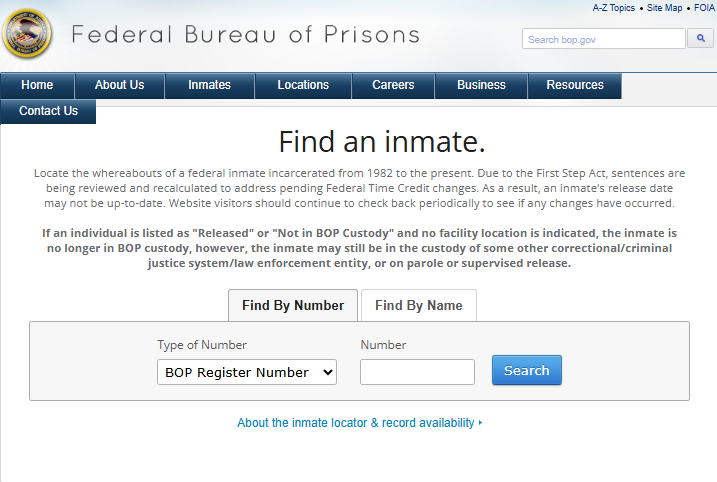
To perform a Yankton Federal Prison Camp inmate search, use the official Federal Bureau of Prisons (BOP) online inmate locator tool, where you can search by inmate name or BOP register number. This federal inmate lookup shows custody status and facility location for individuals held in federal prison, including FPC Yankton.
Use the BOP Inmate Locator Tool
The Federal Bureau of Prisons (BOP) Inmate Locator is the primary and most reliable way to find someone housed at FPC Yankton or any federal prison facility in the United States. The tool is free to use and maintained by the U.S. government. It covers inmates incarcerated in federal facilities from 1982 to the present and is updated regularly.
To start a search, visit the BOP Inmate Locator page: https://www.bop.gov/inmateloc. On that page, you’ll see options to search by name or by number.
How the tool works:
- Pick whether to search by name or to search by inmate number.
- Name search: Enter first and last name (include middle name/initial if available).
- Number search: Enter a BOP Register Number (format like 12345‑678) or other federal identifiers such as a DCDC, FBI, or INS number if known.
Required Info for Yankton Federal Prison Camp Inmate Search
To increase accuracy when searching for an inmate:
Full legal name – Accurate spelling helps avoid wrong or no results.
BOP Register Number – This unique number yields the most exact results.
Optional details: Middle name, age, or race can refine a name search.
Privacy Limits and Federal Rules
The BOP inmate locator offers basic custody and location details, but privacy rules and federal regulations limit what information is shown. Sensitive personal information, criminal case specifics, and medical records are not available through the public search tool. If you need more detailed records than what the locator provides, you can file a Freedom of Information Act (FOIA) request using Form DOJ‑361. This process may take time and only releases information permitted under federal law.
Yankton Federal Prison Camp Visitation Rules
Visitation at FPC Yankton follows clear federal procedures to ensure safety and order while supporting connections between inmates and their loved ones. The inmate visitation Yankton policy outlines who may visit, required approvals, what to wear, and how visits are scheduled.
Who Can Visit: Family, Legal Representatives, Approved Friends
Visiting an inmate at FPC Yankton is limited to people who meet federal criteria and complete approval steps. Immediate family members, such as parents, siblings, spouses, and adult children, are typically eligible for visits once cleared. Legal representatives and attorneys may visit their clients for professional purposes or court‑related needs, provided their credentials are verified.
Friends and extended family can also visit if the inmate submits a visitor list and the Bureau of Prisons authorizes each person. All visitors must be on the inmate’s approved list before visiting; unscheduled or unapproved visits are not allowed. Stanley County Jail gives priority to those with close personal relationships, as consistent visits can support inmate well‑being and reentry efforts.
Eligible Visitor Categories:
- Immediate family members (spouse, parents, adult children)
- Extended family (grandparents, siblings, cousins) after approval
- Approved friends included on the inmate’s list
- Legal representatives and attorneys with proper ID
Background Check and ID Requirements
Before a visit, all potential visitors undergo a background check as part of the approval process. This check is required to confirm that the visitor does not pose a security risk and is not on any restricted or banned lists. It’s essential to submit full legal names and accurate personal information when requesting approval. On the day of the visit, every visitor must present valid, government‑issued photo identification. Acceptable IDs typically include a driver’s license, passport, military ID, or state ID card. If a visitor does not have appropriate identification, the facility will usually refuse entry and cancel the visit. Staff verify IDs against the approved visitor list before allowing access to the visitation area.
Typical ID Requirements:
- Government‑issued photo ID
- Name must match approved visitor list exactly
- Secondary ID may be requested in some cases
Dress Code and Prohibited Items
FPC Yankton enforces a dress code to maintain a respectful and secure environment. Visitors should wear modest, neat clothing that covers shoulders and knees. Clothing that resembles inmate attire (solid colors like orange or khaki), gang symbols, or clothing with offensive imagery is prohibited. Visitors are not allowed to bring certain items into the visitation area. These restrictions help prevent contraband and ensure safety for inmates, staff, and guests. Electronics, bags, food, and personal accessories must be left in vehicles or surrendered before entry. Lockers or checkpoints are often available for temporary storage.
Dress and Items Rules:
- Modest, conservative clothing required
- No inmate‑style or uniform‑like outfits
- Prohibited items: electronics, bags, food, weapons
- Personal items may be checked or stored before entry
Scheduling Visits and Annual Approvals
Visits at FPC Yankton are typically scheduled in advance, with specific days and time slots set by the facility. Once a visitor is approved, the inmate or visitor should contact the visitation office to arrange a date and time. Scheduling ahead avoids long waits and ensures that space and resources are available for the session.
Visitor approvals usually last for one year, after which the inmate must submit a new list or request renewal. Annual approvals help keep records current and maintain up‑to‑date background checks. Visitors should check for rule changes periodically, as the facility may update policies due to operational needs or federal guidelines.
Scheduling Tips:
- Call ahead to reserve a visit time
- Renew approvals annually
- Confirm visiting hours before arrival
- Be on time; late arrivals may be denied entry
Arrival, Check-In & Security Screening
Following visitation rules Yankton, all visitors must complete a structured arrival, check-in, and security screening process at FPC Yankton. This ensures safety for inmates, staff, and guests while maintaining an organized visitation environment. Planning ahead helps visitors avoid delays and ensures visits go smoothly.
Arrival Time Recommendations
Visitors should arrive 30–45 minutes before their scheduled visit. Early arrival allows time for check-in, parking, and navigating the security process without rushing. Arriving late may result in denied entry or reduced visit duration. Families traveling from outside Yankton should account for traffic, weather, and parking logistics.
Tips for Arrival:
- Arrive early to allow time for check-in
- Bring all required identification and approvals
- Plan for parking and possible lines at security
Metal Detector, Pat-Down, and Property Inspection
All visitors must pass through metal detectors and undergo a pat-down search before entering the visitation area. This ensures no prohibited items enter the facility and maintains a safe environment for everyone. Property inspections are conducted to identify restricted items, and visitors may need to store electronics, bags, or food in lockers or vehicles.
Security Screening Highlights:
- Walk-through metal detector required
- Pat-down for all visitors
- Prohibited items stored before entry
Visitor Badge System
Once cleared through security, visitors receive a badge to wear during the entire visit. This badge identifies them as an approved visitor and allows staff to monitor access. Visitors must keep the badge visible and return it after the visit. Misuse or loss of the badge can result in denied entry or removal from the facility.
Badge Rules:
- Wear badge visibly at all times
- Do not lend or transfer to another person
- Return badge to staff after the visit
Lockdowns and Emergency Closures
FPC Yankton may implement lockdowns or emergency closures due to safety, staffing, or operational issues. During these times, scheduled visits can be canceled or rescheduled. Visitors should always confirm their visit ahead of time and follow staff instructions to ensure safety and compliance. Staying informed about potential closures reduces inconvenience and ensures a smooth visit.
Key Points:
- Visits may be canceled during lockdowns
- Confirm status with the visitation office
- Follow staff instructions during emergencies
Video Visitation & Remote Communication
FPC Yankton supports inmate visits SD through video visitation and remote communication systems, allowing family and friends to connect with inmates without traveling to the facility. These options provide convenience, flexibility, and secure communication while following federal visitation rules.
FPC Yankton Online Scheduling System
The camp uses online platforms like GTL or ViaPath to schedule video visits. Visitors must create an account, select the inmate, and reserve a time slot in advance. The system ensures that all remote visits are tracked and approved according to facility guidelines. Scheduling online allows visitors to see available time slots and avoid conflicts with in-person visits. It also provides email confirmations and reminders, helping ensure smooth connections with inmates.
Online Scheduling Tips:
- Create an account on GTL or ViaPath
- Verify the inmate’s ID before booking
- Confirm time and date via email notifications
Remote Visitation vs In-Person Visits
Video or remote visits provide a safe alternative to in-person visits, especially for families living far from Yankton. Remote communication allows real-time interaction through video or phone while maintaining the same rules for approved visitors. While remote visits offer convenience, in-person visits allow for more personal interaction and are ideal for longer sessions. Many families use a combination of both to maintain contact with inmates.
Key Differences:
- Remote: Conducted online or by phone, flexible, convenient
- In-person: Held at FPC Yankton, more personal, may have longer duration
- Both require approved visitor status
Costs and Payment Methods
Remote visits at FPC Yankton typically involve service fees for video or phone calls. These payments are usually made through the online scheduling system using credit/debit cards or pre-funded accounts. Payment is required before the visit is confirmed. Visitors should review cost policies on the GTL or ViaPath portal, as fees may vary based on session length and type (video vs phone). Staying aware of payment requirements helps prevent canceled or delayed visits.
Payment Tips:
- Fund account before scheduling
- Use approved payment methods
- Check for additional fees based on session type
Time Limits and Frequency
FPC Yankton sets time limits for remote visits, often between 25–30 minutes per session, to ensure fair access for all inmates. The frequency of visits may also be limited depending on inmate status, program participation, or facility schedules. Scheduling in advance helps families plan multiple sessions and maintain regular contact with inmates. Visitors should adhere to these limits and avoid overlapping bookings to comply with facility rules.
Guidelines:
- Sessions usually 25–30 minutes
- Frequency depends on inmate eligibility and schedule
- Book in advance to maintain regular contact
Mail and Correspondence
Federal inmates at FPC Yankton can receive mail and correspondence following strict federal guidelines. Properly addressed and approved mail helps inmates stay connected with family, friends, and legal representatives while maintaining security and facility rules.
Mailing Address and Formatting
All mail must be addressed clearly using the inmate’s full name, register number, and facility address. Accurate formatting ensures the mail reaches the inmate without delays or rejection. The recommended format is:
Inmate Full Name, Register Number
FPC Yankton
111 Federal Prison Road
Yankton, SD 57078
Using a return address is mandatory, as mail without it may be refused. Handwriting should be legible, and envelopes should not be excessively large or decorated, as this may result in inspection or rejection.
Address Tips:
- Include inmate full name and register number
- Use proper facility mailing address
- Always include a legible return address
Approved Contents and Restrictions
FPC Yankton allows certain types of mail, such as letters, cards, and photographs within size and content limits. Items containing nudity, explicit content, or contraband are strictly prohibited. Packages must follow federal guidelines and are usually sent through approved vendors.
Common Mail Rules:
- Letters and cards are allowed
- Photos must be appropriate and printed on paper (no Polaroids or electronic media)
- Packages must follow approved vendor rules
- No contraband, drugs, or offensive materials
Avoiding Mail Delays
Mail delays often occur due to incorrect addresses, prohibited content, or improper packaging. To avoid delays, send mail regularly and in standard envelope sizes, clearly addressed, and follow all facility restrictions. Using first-class mail or tracked services can improve delivery speed. Checking with the facility’s mailroom or official website for updated guidelines before sending mail is recommended. Consistent and properly formatted correspondence ensures smooth delivery and fosters regular contact with the inmate.
Delivery Tips:
- Double-check inmate name and register number
- Avoid restricted content or materials
- Use standard envelopes and legible writing
- Consider first-class or tracked shipping
Email or Me ssaging Systems
Some federal facilities allow electronic communication through approved platforms, but availability at FPC Yankton may be limited. If accessible, these systems allow inmates to receive messages more quickly than traditional mail. Visitors must register accounts, follow content rules, and fund any associated costs for electronic messaging.
Key Points:
- Check if electronic messaging is available
- Register accounts before sending messages
- Follow content and fee guidelines
Phone Calls & Commissary Services
At FPC Yankton, a BOP facility, inmates can make phone calls and use commissary services to access approved items. These systems allow inmates to stay connected with family while managing personal needs within facility rules.
How Inmates Can Make Calls
Inmates at FPC Yankton can make outgoing collect or prepaid calls to approved numbers. Calls are generally limited to 15–30 minutes per session and monitored for security purposes. Inmates cannot receive incoming calls, so family and friends must arrange communication times. Calls may be scheduled or requested during designated hours, depending on the inmate’s security level and program participation. Inmates are encouraged to use their calling privileges responsibly to maintain eligibility.
Phone Call Highlights:
- Outgoing collect or prepaid calls only
- Session duration usually 15–30 minutes
- Calls are monitored for security compliance
- No incoming calls allowed
Accepted Vendors and Payment Methods
FPC Yankton uses approved vendors such as Securus Technologies or GTL for phone and electronic communication. Payments for calls can be made online, by phone, or at designated kiosks. Family members can fund inmate accounts to allow prepaid calling. Following vendor-specific instructions ensures calls are successfully processed and reduces service interruptions. Payment confirmation is recommended before expecting a call from the inmate.
Vendor & Payment Tips:
- Use approved vendors like Securus or GTL
- Online or phone payment options available
- Fund inmate account before calling
Prepaid Accounts for Family
Family members can create prepaid accounts to allow inmates to make calls without delays. Prepaid accounts also make it easier to manage spending limits and avoid call interruptions. Visitors should monitor account balances regularly to ensure availability of funds for communication. Prepaid accounts are convenient for both short-term calls and recurring communication. They also reduce administrative delays compared with collect call setups.
Prepaid Account Tips:
- Create accounts through approved vendor portals
- Monitor balance to avoid call interruption
- Use accounts for both one-time and recurring calls
Limitations and Regulations
Phone use is subject to facility rules and federal regulations. Inmates may face restrictions based on disciplinary actions, security status, or program requirements. Calls may also be blocked if they exceed time limits, violate content rules, or are made to unapproved numbers. Commissary deposits follow similar rules. Funds must be used for approved items only, and purchases are monitored. Family members should familiarize themselves with these limitations to avoid service disruptions.
Regulations Summary:
- Calls monitored and restricted by security rules
- Time limits and approved numbers enforced
- Commissary deposits limited to approved items
Visiting Hours & Scheduling
Visitors to FPC Yankton should follow the official visiting hours Yankton schedule for both in-person and remote visits. Proper planning ensures that visits run smoothly and comply with federal prison regulations.
In-Person Visit Blocks
FPC Yankton offers designated blocks of time for in-person visits. These blocks are scheduled to balance staff availability, inmate programs, and security requirements. Visits are usually limited in duration to allow multiple inmates access throughout the day. Arriving early is recommended to complete check-in and security screening without cutting into visit time. Visitors should also confirm the visit day and time in advance, as schedules may vary based on inmate housing units or special facility events.
In-Person Visit Tips:
- Arrive 30–45 minutes early for check-in
- Follow assigned time blocks for your inmate
- Confirm the visit day and duration before traveling
Remote/Video Scheduling Rules
Remote or video visits must be scheduled through approved platforms such as GTL or ViaPath. Visitors need an account and must select the inmate and a specific time slot. Remote visits are subject to facility approval and monitored for compliance with federal rules. Scheduling online ensures that sessions do not overlap with other visits and that the inmate’s time is properly allocated. Frequent communication via remote sessions is often encouraged for families living far from Yankton.
Remote Visit Guidelines:
- Use GTL or ViaPath to book sessions
- Schedule in advance to reserve time slots
- Remote visits follow the same approval rules as in-person visits
Recommended Verification Before Travel
Before traveling for an in-person visit, always verify the inmate’s status, facility schedule, and visitation hours. Unexpected lockdowns, staffing changes, or emergency closures can affect visit availability. Checking with the visitation office reduces travel disruptions and ensures the visit will occur as planned. Visitors should also ensure that all required documentation, IDs, and approvals are up-to-date to avoid delays or denied entry. Preparing in advance helps maximize the time spent with inmates while complying with FPC Yankton regulations.
Verification Tips:
- Call the visitation office to confirm the schedule
- Check for lockdowns or emergency closures
- Ensure IDs and approvals are current
Programs, Work, and Inmate Life
FPC Yankton, a minimum security federal prison, provides inmates with structured work, education, and recreational programs. These initiatives aim to develop skills, encourage rehabilitation, and support successful reintegration into society.
Work Assignments and UNICOR Opportunities
Inmates at FPC Yankton participate in work assignments that help maintain the facility and provide job experience. Opportunities may include maintenance, food service, landscaping, or administrative support. Additionally, some inmates can work with UNICOR, the federal prison industries program, gaining valuable vocational skills while earning wages. Work assignments help inmates build responsibility, develop work habits, and prepare for employment after release.
Key Work Highlights:
- Facility maintenance, food service, and administrative tasks
- UNICOR programs for vocational training and paid work
- Skills development and preparation for reentry
Education and Vocational Programs
FPC Yankton offers a variety of education and vocational programs. Inmates can enroll in GED courses, literacy classes, or college-level programs. Vocational training includes carpentry, plumbing, welding, and computer skills. Participation in education and vocational programs improves inmates’ qualifications for employment upon release and helps reduce recidivism. Inmates are encouraged to complete certifications or credentials that will benefit them long-term.
Education & Vocational Options:
- GED and literacy courses
- College-level classes
- Vocational training: carpentry, plumbing, welding, computers
Recreation, Counseling, and Reintegration Support
Recreational activities at FPC Yankton promote physical fitness and mental well-being. Options include sports, fitness programs, arts, and hobby classes. Counseling services address substance abuse, mental health, and behavioral issues. The facility also provides reintegration support, including life skills training, financial literacy, and reentry planning. These programs aim to prepare inmates for a smooth transition back into the community while promoting personal growth and rehabilitation.
Rehabilitation & Recreation:
- Sports, fitness, and hobby programs
- Counseling for mental health and substance abuse
- Life skills and reentry planning
Legal Considerations and Rights
Federal inmates at FPC Yankton have rights under federal law, and visitors must follow facility rules to maintain these privileges. Understanding inmate rights, visitation rules, and prison regulations helps ensure visits and interactions comply with legal standards.
Visitor Rights and Restrictions
Visitors have the right to access approved inmate visitation opportunities, both in-person and remote, provided they meet all clearance requirements. However, rights are subject to restrictions, including background checks, dress codes, approved visitor lists, and prohibited items. Visitors must also comply with staff instructions and facility security protocols during all interactions.
Visitor Rights & Restrictions:
- Access to scheduled in-person and remote visits
- Must be on the inmate’s approved visitor list
- Comply with dress code and security rules
- Follow staff instructions during visits
Disciplinary Actions and Visit Suspensions
Inmates may face disciplinary actions for violating facility rules, which can include temporary or permanent suspension of visitation privileges. Misconduct, contraband, or participation in prohibited activities can trigger restrictions. Visitors associated with security violations may also face temporary suspension from visitation until cleared.
Disciplinary Highlights:
- Violations can lead to visit suspension
- Both inmates and visitors may be affected
- Suspensions follow BOP regulations and internal review
Reporting Issues or Concerns
Visitors or inmates who encounter problems during visits, such as disputes, misconduct, or policy confusion, can report concerns to the facility’s records or administrative office. Reports are handled confidentially, and staff aim to resolve issues promptly while maintaining compliance with federal rules.
Reporting Tips:
- Contact records or administration office directly
- Provide clear details of the concern
- Understand that resolution follows federal and facility protocols
Yankton County Jail vs FPC Yankton
The Yankton Federal Prison Camp and Yankton County Jail serve different purposes, security levels, and inmate populations. Understanding the distinctions helps families and legal representatives navigate visitation, custody, and resources effectively.
Differences in Security, Visitation, and Custody
FPC Yankton is a minimum security federal facility under the Bureau of Prisons, housing inmates serving federal sentences. In contrast, Yankton County Jail is a local detention center for individuals awaiting trial, sentencing, or serving short-term sentences. Visitation rules and schedules differ significantly: federal inmates follow BOP guidelines for in-person and remote visits, while county jail visits are typically shorter, more restricted, and subject to local policies. Security protocols at FPC Yankton are also standardized federally, while county facilities may have more flexible procedures based on local regulations.
Key Differences:
- Security: Minimum security (FPC Yankton) vs local detention (county jail)
- Visitation: Federal guidelines vs local scheduling rules
- Custody: Federal inmates serving sentences vs pretrial or short-term county inmates
BOP vs Local Custody
BOP custody applies when an individual is convicted of a federal crime and sentenced to serve time in a federal facility like FPC Yankton. Local custody applies to those awaiting trial, serving misdemeanor sentences, or held pretrial at Yankton County Jail. Knowing which system applies determines visitation procedures, mail, phone access, and inmate rights.
Resources:
- Yankton County Jail Inmate Search & Info
- BOP facility locator for federal inmates: https://www.bop.gov/inmateloc
Frequently Asked Questions
This FPC Yankton FA answers common questions about visitation, mail, phone communication, and funds for federal inmates. The detailed guidance ensures that family, friends, and legal representatives follow facility rules while maintaining safe and effective contact with inmates.
How do I visit a federal inmate at Yankton?
Visiting an inmate at FPC Yankton requires being on the inmate’s approved visitor list, which is submitted by the inmate and cleared through a background check. In-person visits must comply with the facility’s dress code, present valid government-issued identification, and go through metal detectors and pat-downs. Visitors should avoid bringing prohibited items such as electronics, bags, or food. Remote or video visits are scheduled online through approved platforms like GTL or ViaPath, where visitors select available time slots. Both in-person and remote visits follow strict federal guidelines to ensure security while maintaining meaningful contact with inmates. Arriving early for in-person visits and confirming video sessions reduces the risk of delays or cancellations.
Can children visit?
Children are allowed to visit but must always be accompanied by a parent or legal guardian. Visitors under 18 require prior approval from the facility, and the accompanying adult must provide valid identification. During the visit, children must be supervised at all times and follow all rules and instructions provided by staff. Facilities recommend preparing children for the visit by explaining appropriate behavior, security protocols, and dress requirements. Families should also check for any age-specific rules, such as restrictions on toys or items they may bring into the visitation area.
How far in advance should I schedule a video visit?
Video visits should be scheduled at least one to two weeks in advance, depending on availability and the inmate’s custody status. Online scheduling ensures that multiple visitors do not overlap and allows staff to confirm that the inmate is eligible for the requested session. Visitors should verify their approval status, ensure that all personal information is accurate, and confirm the scheduled time via email or the platform. Remote visits are typically limited in duration, often around 25–30 minutes, so confirming all details ahead of time helps maximize the visit.
How do I send money or mail?
Funds can be sent to inmates through prepaid accounts or approved vendors such as GTL. Money deposited can be used for commissary purchases, phone calls, and other approved items. Mail must include the inmate’s full name, register number, and FPC Yankton address, and may only contain letters, cards, or photographs that comply with facility guidelines. Packages or restricted items are strictly prohibited and will be returned or confiscated. Using the correct address and approved mailing formats reduces delays and ensures that correspondence and funds reach inmates without issues. Visitors should also check for facility updates regarding electronic messaging or email systems if available.
What should I do if I encounter a problem during a visit?
If you experience issues during a visit, whether in-person or remote, contact the facility’s administrative office or records department immediately. Issues may include scheduling conflicts, denied entry due to ID or visitor list errors, or procedural misunderstandings. Staff handle reports confidentially and follow federal regulations to resolve concerns while maintaining security. Keeping copies of confirmations, IDs, and correspondence can help resolve disputes or questions more efficiently. Visitors are encouraged to remain patient and follow instructions to ensure a safe and successful visit.